Web Design Strategies for Luxury Brands in Dubai
- May 29, 2026
- Post By: Alex Mariyan Sebastian
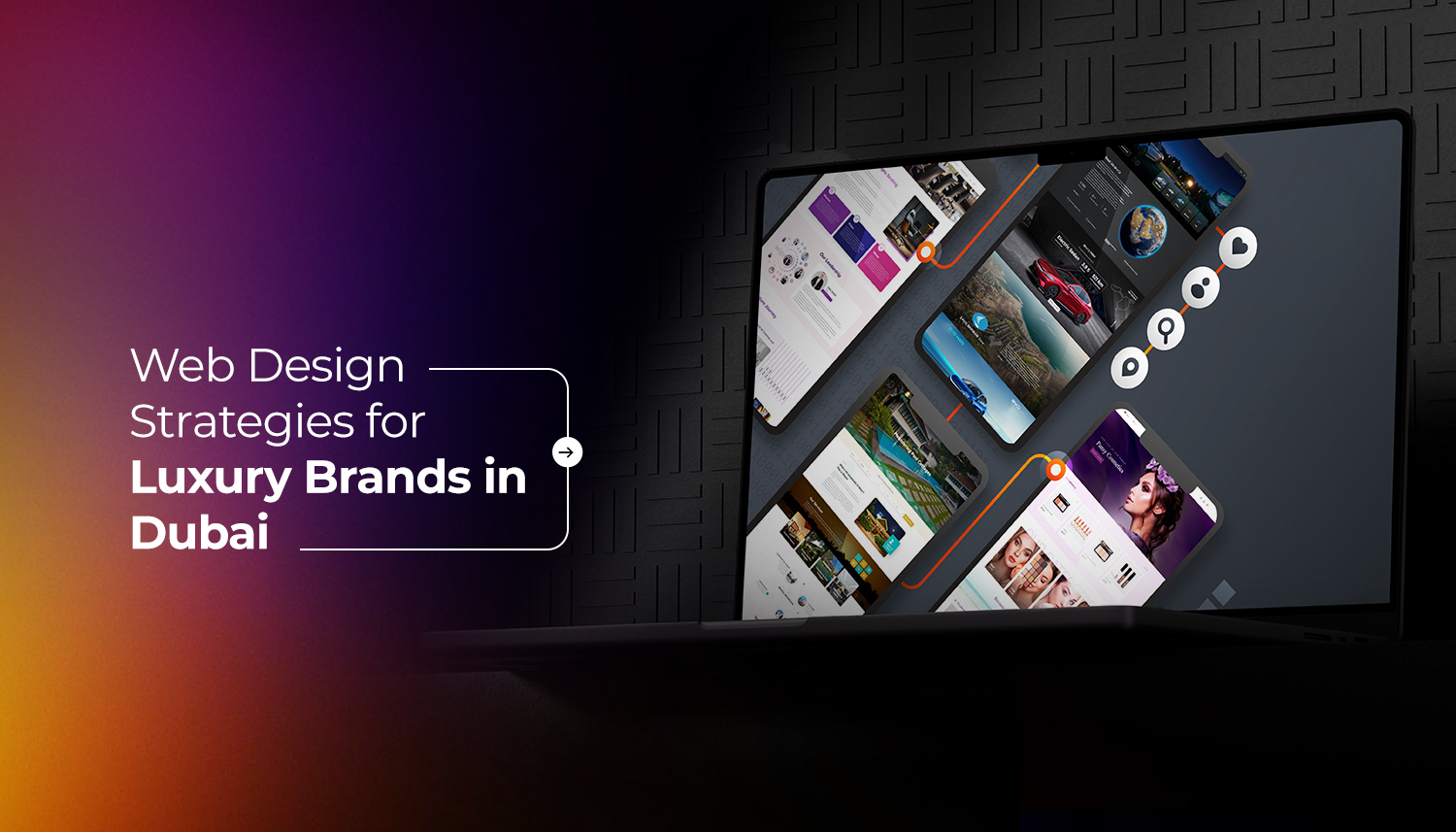
The luxury market in Dubai requires your website to function as your showroom. But many “showrooms” currently operate in a way that harms the brand.
Dubai functions as a unique market because it is one of the world’s most concentrated areas of high-net-worth individuals, together with its growing tourist industry and its customers who demand exceptional quality from luxury goods.
The commercial environment of Dubai exists between two extremes, which establish its entire value. First impressions create results which determine success through business operations. All luxury consumers in Dubai today establish their first impression online before visiting shops or making calls.
A luxury brand uses its website to show consumers its dedication to excellence through its structured content and visual presentation. The article shows which web design elements luxury brands in Dubai must follow to achieve their business goals and which design patterns succeed while most local luxury websites fail to meet their objectives.
Why does web design matter differently for luxury brands in Dubai?
Luxury consumers aren’t like mass-market consumers. They’re not bargain hunting. They’re seeking evidence that the brand measures up to their expectations. Verkeer estimates that 78% of United Arab Emirates shoppers research brands on social networks and online. And 72% of UAE consumers are prepared to pay more for a trusted brand.
And it begins with the website. A brand selling watches for AED 50,000 or jewellery for AED 200,000 can’t afford a slow website that is not mobile-friendly or five years out of date. The style of the site needs to match the style of the product. Anything else creates a disjuncture and a loss of revenue.
Then there’s the complexity of Dubai. There are more than 200 nationalities in the city and more than 18.72 million international overnight visitors in 2024 alone. A luxury website in Dubai has to cater to local clients who prefer Arabic language support and culturally sensitive content and European holidaymakers who shop around for the best price.
What does a luxury website actually need to get right?
There are a number of aspects to this. Sure, one is design, but that’s not the most difficult. More critical for a luxury website are speed, structure, mobile responsiveness and the ability to convey exclusivity without coming across as pretentious.
1. Speed that doesn’t compromise quality
Load speed can be an issue for luxury websites because the use of high-quality images and video is essential for the brand. But there are consequences of slow loading. As Google’s Core Web Vitals affect rankings and, more importantly, each second that a website takes to load, the higher the risk of a user abandoning the site before the page loads. The answer is not to sacrifice visual appeal. It’s to optimise the images, use new image formats, lazy load images, and ensure the web server can handle the traffic without slowing down. You can have a luxury website that’s beautiful and fast. That’s not a contradiction. It’s just good web design.
2. Mobile experience as a priority, not an afterthought
The UAE has one of the highest mobile user rates in the world. Dubai consumers often view luxury websites while commuting, at the airport or even while on the plane. If a website looks great on a desktop, but not on a mobile phone, it’s a problem. The mobile version of a website is also assessed by Google as part of its “Mobile-First Indexing” policy, so the mobile experience also impacts a site’s search ranking. A luxury website has to convey the same classy feel on mobile as it does on desktop.
3. Visual language that communicates exclusivity
This is a mistake many luxury websites make. They opt for stock photos, eclectic typefaces or layouts that look like any middle-market brand. A truly luxurious website takes care with its use of white space, professional photography, subtle colour choices and carefully selected typography. Everything should convey a sense of quality. This can be found in product photography, copywriting, and even in some of the smaller interactions, like hovering over a link or navigating through a gallery.
4. Language and cultural localisation
Dubai is a city with an Arabic-speaking, highly internationalised population. For luxury brands looking to engage with the Emirati market and Arabic-speaking population in the Gulf Cooperation Council (GCC) region, an effective Arabic localisation of the website is a must. Not a translated “also-ran”. A properly tailored, right-to-left, culturally sensitive version, with culturally relevant images and tone, that offers a similar Arabic UX to the English site. Emiratis are more receptive to culturally relevant marketing strategies and Arabic language appeals, Verkeer says. Not taking this into account means missing out on a big market.
5. E-commerce built for high-value transactions
The UAE’s luxury e-commerce market is on the rise. E-commerce in the UAE grew to AED 32.3 billion in 2024 and luxury items are among the fastest-growing segments, according to EZDubai data via Emirates News Agency. But the UX is not the same when selling a piece of jewellery as it is when selling a book. The payment process needs to be safe. Users must be able to pay via local and international payments and digital wallets, which in 2020 were used by 41% of users, and in 2024 by 53%. Product detail pages need to provide sufficient information, sufficient imagery and sufficient reassurance to commit to a major purchase without being able to touch the product.
6. SEO built into the foundation, not added later
The SEO foundation needs to exist as a built-in component which should not require any future maintenance work. The existence of a luxury website which nobody can discover results in wasted resources. The search engine optimisation process for Dubai luxury brands needs to support both English and Arabic search patterns together with local and international search patterns and Google content requirements for high-end brands.
The Google E-E-A-T framework establishes experience and expertise and authoritativeness and trustworthiness standards, which are essential for this situation. Luxury brands possess actual industry expertise together with historical brand value. The website needs to present this authority through its content and its organisational framework and the extent of information provided. Stronger search engine rankings result from well-crafted brand narratives together with comprehensive product information and explicit authentication details.
7. Privacy, security, and trust signals
The two elements of privacy and security, together with trust indicators, create a complete system that protects user data. High-income customers demonstrate appropriate caution about disclosing their credit card information and other personal information.
A luxury website needs to implement an SSL certificate which must be accompanied by a privacy policy, and the site should include trust badges and payment security icons as additional requirements. The Personal Data Protection Law (PDPL) establishes a new compliance requirement which luxury brands must address when collecting customer data for personalised service in the UAE market.
What mistakes do luxury brands commonly make with their websites in Dubai?
Many of the mistakes are relatively simple. Sites with non-functioning links, out-of-date inventories and no prices are frustrating and confusing – two words that are anathema to luxury. Some boast gorgeous home pages that break in half the moment you click through to a product page or click on contact.
A common error is when in-store and online experiences don’t line up. If we have a beautiful, highly tactile experience in the store, the online experience should match it. When it’s not, there’s a disconnect.
Then there’s the problem with attention to speed and technical performance. It’s not uncommon to see some of the best design work on the websites of luxury brands being ruined by technical incompetence. Four- or five-second page loads, galleries that don’t display correctly on mobile, or checkout processes that throw a wobbly all undermine the intentions of the design. The solution to this problem is a web designing agency in Dubai that considers both the creative and technical aspects of the equation.
How does Inter Smart approach web design for luxury brands?
Inter Smart is a top web designing agency in UAE with extensive expertise in designing websites for luxury and high-end brands in Dubai and beyond. It’s not a prescriptive luxury approach. It’s about understanding what a particular brand is about, who its customers are and what the website is supposed to achieve at each touchpoint of a customer’s journey.
All of Inter Smart’s web projects begin with a discovery phase: brand strategy, persona development, competitive analysis, and digital audits. The creative design and development process is then built upon the brand’s visual identity and business goals, not what’s “in fashion” or cheap to implement.
Inter Smart also brings an understanding of the Dubai luxury consumer that generic agencies simply don’t have. The cultural nuances, the payment expectations, the importance of Arabic UX, the level of visual refinement that this audience expects. These aren’t details that can be figured out after the site is built. They have to be designed in from day one.
If your luxury brand’s website doesn’t reflect the quality of what you sell, that’s a problem worth solving. Talk to Inter Smart. Not a template, not a generic approach. A web presence built to match your brand.

Get A Call back from Our Expert
Need tailored guidance or have specific questions? Simply request a callback, and one of our knowledgeable experts will reach out to you at a time that suits your schedule.