How Conversion Tracking Improves Ad Performance
- July 24, 2026
- Post By: Alex Mariyan Sebastian
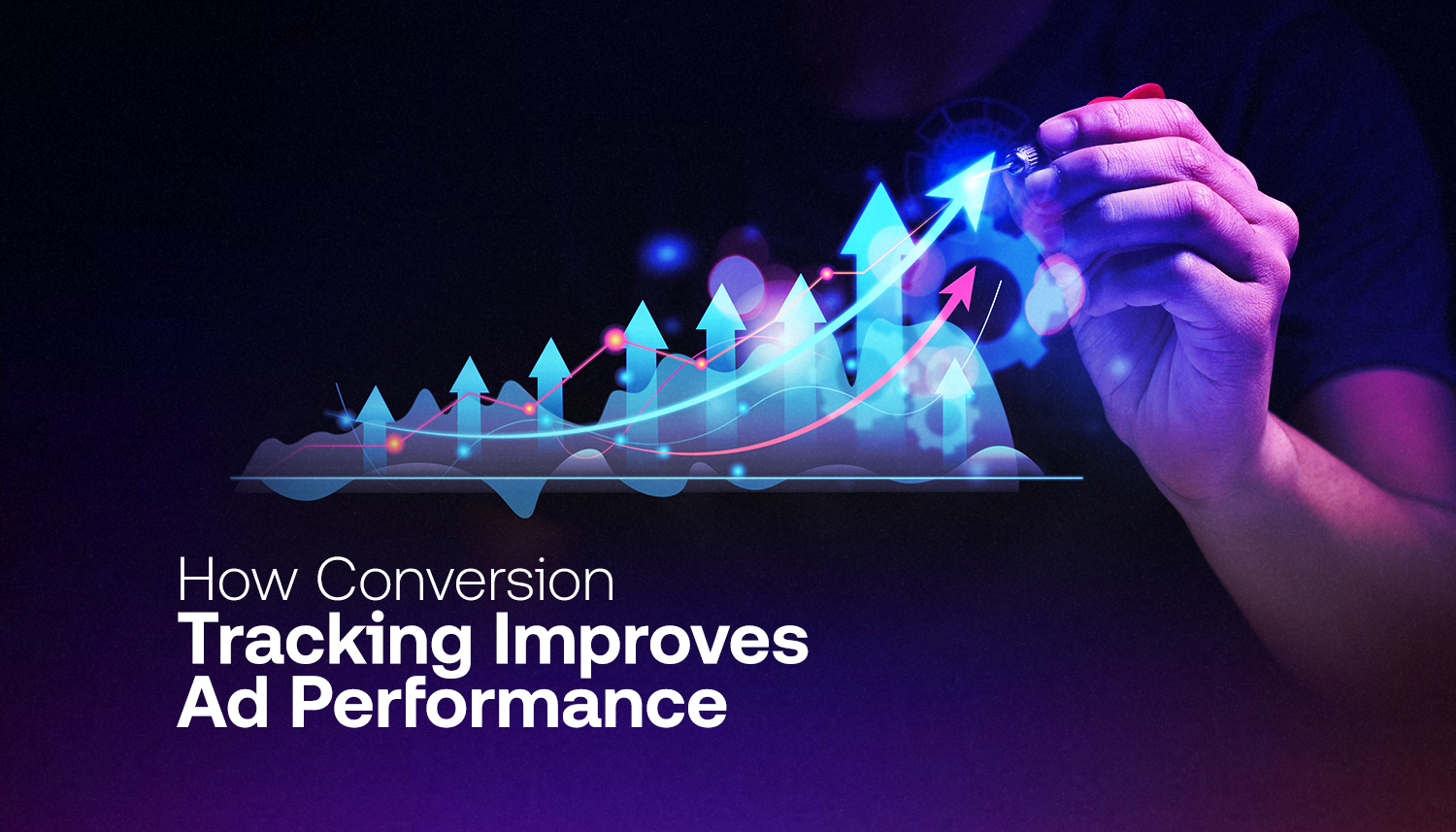
Every ad campaign tells two stories. One story is about traffic. The other is about outcomes. Most reports show you the first. Conversion tracking reveals the second.
A lot of businesses in the UAE spend real money on Google Ads or Meta campaigns and then judge performance based on clicks and impressions.
Conversion tracking changes everything about how you run and improve your campaigns.
This article explains what conversion tracking is, how it works, and why it’s the single most important setup step before you spend a dirham on paid advertising.
What is conversion tracking and why does it matter?
A conversion is any action that matters to your business. Someone filling out a contact form. A phone call from your ad. A product purchase. A newsletter sign-up.
Conversion tracking is the process of logging when those actions happen and attributing them back to the specific ad, keyword or campaign that caused them.
Once you have conversion tracking set up, it’s all crystal clear. See the number of enquiries received from your Google Search campaign last month and how many closed.
A good description of the way this works is in Google’s guide to conversion tracking in Google Ads. This is done by placing a small piece of code (a tag) on the page the user lands on after performing the desired action (i.e., a thank you page after submitting a form). That’s a conversion – somebody clicks on your ad and goes to that page.
How does conversion tracking actually improve ad performance?
That’s where it really gets useful. Conversion tracking doesn’t just tell you what happened. It feeds data back into your ad platform so the system is learning over time.
It tells the algorithm what success is
Google Ads uses machine learning for campaign optimisation. But the algorithm can only optimise for what it can measure. If you haven’t told it what a conversion is, it’s optimising for clicks, which is not the same thing. Once conversion tracking is live, Google knows what a successful outcome looks like for your business.
Then it can automatically adjust bids, targeting and delivery of the ads to find more of those outcomes. The basis of Smart Bidding strategies like Target CPA and Target ROAS, which only work if you have reliable conversion data flowing in.
It shows you which keywords are really worth paying for
Not every keyword that drives traffic drives revenue. Some keywords bring lots of clicks from people who aren’t actually interested in buying. Others bring fewer clicks but a much higher rate of conversions. Conversion tracking makes this visible. You can see exactly which keywords are generating leads or sales and which ones are eating budget for no return. That lets you cut waste and redirect spend toward what’s working.
It reveals problems with your landing pages
If an ad is getting good click-throughs and hardly any conversions, the ad isn’t the problem. The landing page is Conversion tracking makes it clear. It tells you when traffic is coming but not converting, which is a sign that something about the page experience is breaking down, whether it’s the loading speed, the message, the layout, or the call to action. Without this information you would continue to pay for traffic and wonder why your phone is not ringing.
It makes budget decisions based on actual ROI
When you know the cost per conversion for each campaign, you can make rational decisions about where to put more budget and where to pull back. A campaign that costs more per click but delivers a lower cost per lead is the better investment. You only know that with conversion tracking in place. Without it, you’re allocating budget based on surface-level metrics that don’t reflect real business outcomes.
It powers remarketing audiences
Conversion tracking also feeds into audience building. Once Google learns who’s converted on your site, it can help you find lookalikes for targeting. It can also help you exclude people who have already converted so you aren’t wasting spend showing ads to existing customers when you are trying to reach new ones.
What types of conversions should you be tracking?
This depends on your business, but the most common and valuable ones to track are:
Form submissions
This is the most straightforward one. If your website has an enquiry form, contact form, or quote request form, every submission should be tracked as a conversion. This is how most service businesses measure lead generation from their ads.
Phone calls
Calls that come directly from your ads, or calls that come from your website after a click-through, can be tracked with Google Ads. This is important in businesses where most sales are done on the phone. Without it, you’d never know that half your conversions are coming from phone calls rather than form fills.
Page visits after key actions
Thank-you pages, order confirmation pages, account creation success pages. Any page a user reaches only after completing a meaningful action can be used as a conversion signal. These are easy to set up and give you a reliable measure of completion.
Purchases and e-commerce transactions
For e-commerce businesses, tracking actual purchase transactions, including the value of each transaction, is essential. It lets you measure real revenue from your campaigns and calculate return on ad spend with accuracy. Google’s e-commerce conversion tracking setup documentation walks through how to do this properly.
What mistakes do businesses commonly make with conversion tracking?
Not setting it up at all
Surprisingly common. Many businesses run ads for months without any conversion tracking in place. They’re spending money with no visibility into what that spending is actually producing. It’s the most basic setup step and the most frequently skipped.
Tracking the wrong things
For example, counting a homepage visit as a conversion, or counting every button click regardless of what it leads to. If you have a lot of low-value signals in your conversion data the algorithm is optimising for those low-value actions. The result is a campaign that technically “converts” a lot but doesn’t generate real business outcomes.
Duplicate conversions
This happens when the same conversion action is tracked twice, often because both a Google tag and a Google Analytics import are recording the same event. It inflates your conversion numbers and gives the algorithm a distorted view of performance. Checking for and removing duplicate conversion actions is a basic audit step that’s often missed.
Ignoring conversion lag
Some conversions don’t happen immediately. Someone sees your ad today, thinks about it for a week, then comes back and fills out the form. Conversion tracking has a lookback window that captures delayed conversions, but many advertisers don’t factor this into their performance measurement. If you stop a campaign too early because it doesn’t look like it’s converting, you’re often stopping something that was actually working.
Enhanced conversions and why they matter now
Standard conversion tracking has become less accurate over time. Ad blockers, cookie restrictions, and changes in browser privacy will mean that some share of real conversions will not be captured. Google has a solution to this issue called Enhanced Conversions, which uses first-party data, such as hashed email addresses provided in forms, to better match conversions.
Now, setting up Enhanced Conversions is worth it if businesses want the most complete picture of what their ads are actually producing. Google’s Enhanced Conversions guide explains the setup in detail. The difference in reported conversions can be meaningful, particularly for campaigns with longer purchase cycles or privacy-conscious audiences.
How Inter Smart handles conversion tracking for its clients
Conversion tracking sounds straightforward. In practice, setting it up correctly, making sure there are no duplicates, covering all the right conversion types, and connecting it properly to Smart Bidding strategies is work that requires experience to get right.
Inter Smart is a leading digital marketing agency in Dubai with a track record of building and managing paid campaigns that are grounded in real data. Every campaign Inter Smart runs starts with a full conversion tracking audit. What’s being tracked? Is the data clean? Are there gaps between what the platform is reporting and what the business is actually receiving in leads or sales? These questions get answered before any budget is spent.
As an experienced digital marketing company in UAE, Inter Smart knows that the quality of your conversion data determines the quality of your ad performance. Google’s algorithm can only work with what it’s given. Give it clean, accurate, complete conversion signals, and it will find better results. Give it nothing, or worse, give it bad data, and no amount of budget will fix that.
If your campaigns are running but you’re not confident in what they’re producing, talk to Inter Smart. Get the foundation right first, and everything else becomes easier to improve.


Get A Call back from Our Expert
Need tailored guidance or have specific questions? Simply request a callback, and one of our knowledgeable experts will reach out to you at a time that suits your schedule.