Why Reach and Impressions Are Different Metrics
- September 2, 2026
- Post By: Alex Mariyan Sebastian
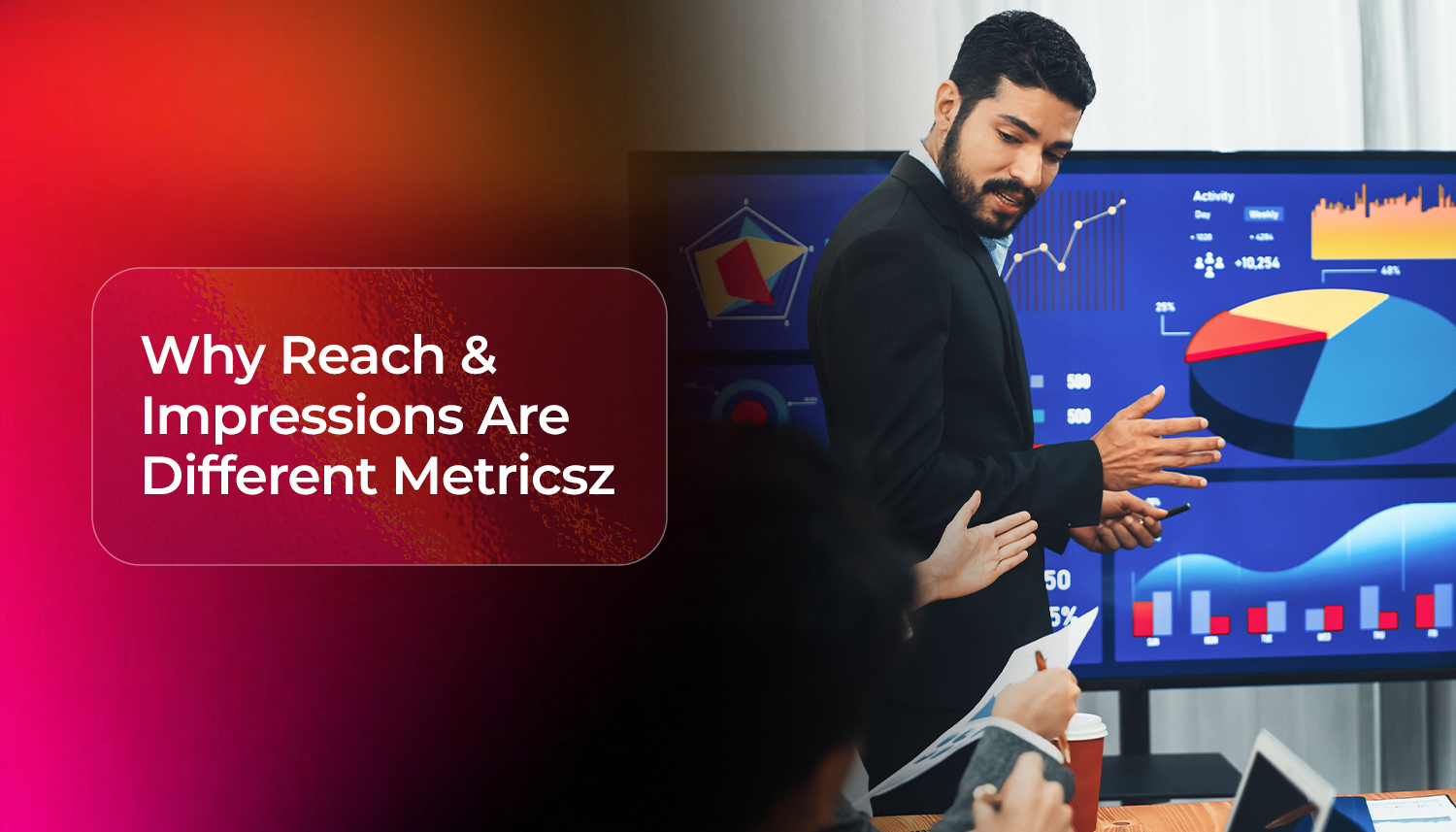
Reach and impressions both measure visibility. But they are different things, and if you mix them up, you are going to make some serious misjudgments when evaluating a campaign.
Reach is the number of individuals who viewed your content. Impressions: The number of times your content has been seen on a screen, including multiple times by the same individual.
| In simple terms: Reach is the number of unique individuals who viewed your content at least once. Impressions refer to the number of times your content has been seen, however many times and by whom. |
What is reach in social media marketing?
Reach gives you the number of unique individuals your content reached in total. There is no limit on how many times a person can view the post and count it.
The reach is divided into two categories:
- When your content appears to their fans in their own feeds, search results, or because they shared it with other people.
- Organic reach: views on your content from followers who aren’t paying for you to reach them.
What are impressions?
Every time your content is displayed on a screen, you’ve got an impression. A single view of the same post thrice is considered three impressions.
Impressions will always be greater than or equal to reach. They can never get any lower. If the number of impressions equals the number of reach, this means everyone who viewed the content viewed it only once.
Impressions can help you compare the frequency of your content, the total number of impressions, and the frequency of the same people. Impressions will provide a better read for brand awareness campaigns where repeated exposure is important.
Reach vs impressions: a direct comparison
Here’s how the two metrics line up side by side:
| Reach | Impressions |
| Unique people who saw your content | Total times your content was displayed |
| Reach is always equal to or less than impressions | Always equal to or higher than reach |
| How wide is your audience | How often is your content being shown |
| Measuring campaign coverage and new audience growth | Measuring frequency and message reinforcement |
| 2,000 unique accounts saw your post | 10,000 total views (same 2,000 people, ~5x each) |
The gap between the two numbers is called frequency: how many times on average each person saw your content. You can calculate it simply: impressions divided by reach equals frequency.
Why does frequency matter?
Frequency is an indication of how aggressively you’re pushing the same audience. The higher the frequency, the more your content will be displayed to a smaller audience.
This can be a conscious action. Frequency is a term that is used intentionally in advertising. The result of many studies on the effectiveness of ads has been a consistent finding: people need to see a message more than once before it gets registered and acted on. For campaigns that are geared toward conversion, rather than awareness, it is not unusual to show the same ad to the same person three or five times.
Social Insider’s reach and impressions data analysis showed that a frequency higher than three in a campaign can cause ad fatigue when the same user starts to ignore or be annoyed by the repetition of ads. You can detect this by keeping track of the reach vs. impressions.
How do different platforms define reach and impressions?
This is where it gets slightly complicated, because platforms define and measure these metrics differently.
| Platform | Unique reach metric | Total exposure metric |
| Reach | Impressions / Views, depending on reporting surface | |
| Reach | Views | |
| Members reached | Impressions | |
| TikTok | Reach, where available | Video views |
| X | No standard organic reach metric | Views |
The bottom line: read the definitions of these terms on any given platform before drawing conclusions, and particularly consider performance on a variety of platforms. Definitions differ enough from platform to platform that a comparison of reach and impressions that doesn’t take into account the differences may be misinterpreted, according to Meltwater’s breakdown of reach vs. impressions.
When should you focus on reach, and when on impressions?
Either one or both of these are helpful. The question lies in which one sends you the proper signal for what you want to accomplish.
Focus on reach when:
- You are conducting an awareness campaign and you want to know about the number of new people you are reaching.
- You’re embarking on an endeavor that is new and testing the reach of the message
- You want to track audience growth over time
Focus on impressions when:
- You’re running a campaign that relies on repeated exposure to drive action
- You’re testing whether an ad is being delivered as frequently as planned
- You want to understand overall content visibility, including repeat views
For most of the time you’ll want to view them both, along with engagement rate. When a post has a strong reach and low engagement rate, it indicates that the content is not resonating. A post that has an engagement rate of 10% or more but small reach is a great piece of content that is not being spread far enough.
What’s a healthy ratio of impressions to reach?
There is no standard yardstick. This depends on the platform, content and the objective of the campaign.
As a general guide:
- Organic posts: These posts can be made at a rate of 1 to 2 times per month. If you are a typical person, you’ll likely have read an organic post once or twice and forgotten about it.
- Paid campaigns for awareness: 2-3 is usually a good frequency, but after that it stops being effective.
- For paid campaigns for conversion, a frequency of 3 – 7 can sometimes be deliberate, as retargeting can be a component of the conversion process.
These are suggestions and not rules. It’s preferable to monitor frequency with conversion data. When a high number of conversions are happening at a high rate, the repetition is effective. If they are converting less and more on the frequency they are getting more and more attention.
How does Inter Smart use reach and impressions data for clients?
Understanding what these numbers mean is one thing. Using them to make better decisions is another.
It’s one thing to know what these numbers mean. It’s another when using them to make better decisions.
At Inter Smart, our reach and impressions data is integrated into a larger picture of each campaign we run. High impressions-to-reach ratio is a measure of whether or not an audience is being over-served. When it’s time to expand targeting or refresh creative, a reach plateau tells us. Engagement rate alongside reach tells us whether the content itself is doing its job.
This matters particularly for clients in competitive markets like Dubai and across the UAE, where ad budgets need to work efficiently. A digital marketing company in Dubai running a paid awareness campaign needs to know whether its budget is reaching new people or cycling through the same small audience.
Inter Smart is a leading digital marketing company in UAE. Our campaigns are built on data from the start, and reporting goes beyond raw numbers to explain what those numbers actually mean for the business. If you want clearer visibility into your campaign performance, talk to Inter Smart.
Key Takeaways
- Reach counts unique people. Impressions count total views. Reach is always equal to or less than impressions.
- Frequency = impressions divided by reach. It tells you how many times on average each person saw your content.
- High frequency can be strategic for conversion campaigns, or a warning sign that your audience is too small and being over-served.
- Platforms define these metrics differently. Instagram replaced “impressions” with “views” in May 2025. X reports impressions only, with no reach metric.
- Use reach to measure how far your message spread. Use impressions to understand how often it was shown.
- Neither metric tells the full story alone. Pair them with engagement rate to understand whether your content is actually working.

Get A Call back from Our Expert
Need tailored guidance or have specific questions? Simply request a callback, and one of our knowledgeable experts will reach out to you at a time that suits your schedule.